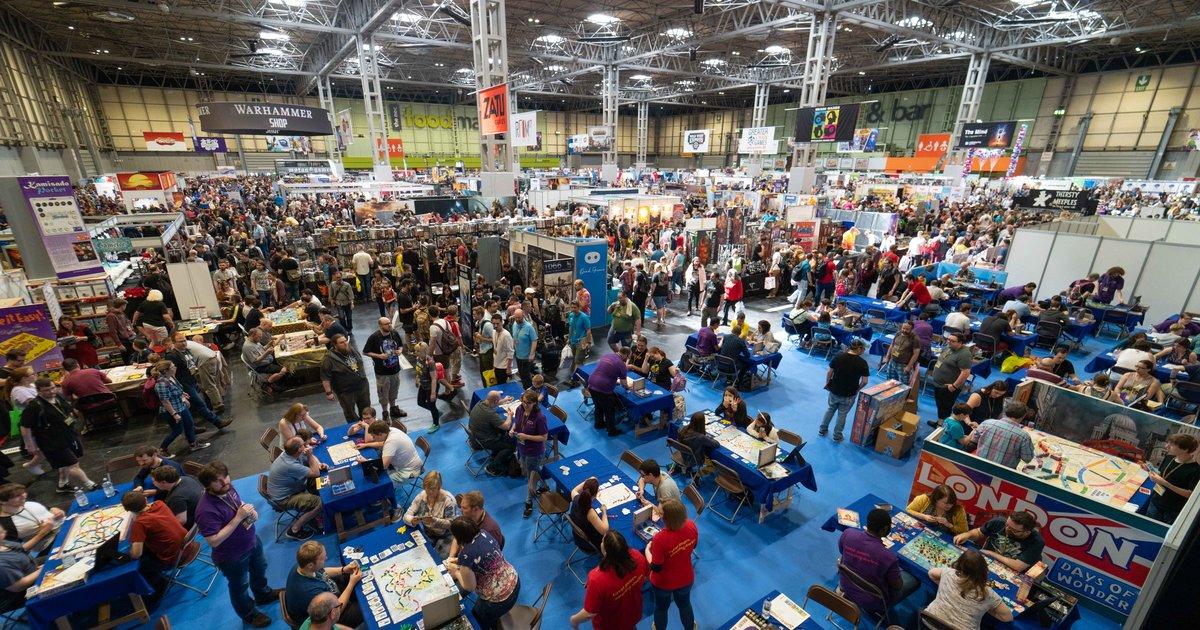
A board game makes a good gift when it suits the people who will play it: how many sit down at the table, how much time they have and how much experience they bring. That is why we have grouped these ideas by who you are giving the game to. Player counts, playing times and ages come from our catalog, and each game links to its page, with reviews from the Meeplay community and, where available, the shops that sell it.
Before you choose: three questions
- How many people will play it? A game for a couple is not the same as one for Christmas Eve dinner. Check the player count on each game's page.
- How much time do they usually have? A 15-minute game reaches the table far more often than a two-hour one.
- Have they played modern board games before? If not, something that takes five minutes to explain is a better bet than the most awarded game of the year.
For families with children
- Spot it! (Dobble) (2-8 players, 15 min, ages 6+). Any two cards always share exactly one symbol, and whoever spots it first wins. It fits in a pocket and takes a minute to explain.
- Virus! (2-6 players, 20 min, ages 8+). The goal is to collect four healthy organs before anyone else, while spreading viruses to the rest of the table and curing your own with medicines and treatments.
- Kingdomino (2-4 players, 25 min, ages 8+). Each player builds a small kingdom with domino-style tiles. Taking a better tile comes at a price: in the next round you choose later.
- Carcassonne (2-5 players, 45 min, ages 7+). Players take turns placing tiles to build roads, cities and monasteries, and claim them with their meeples. A classic that holds up over many plays.
- El Castillo del Terror (2-4 players, 30 min, ages 6+). Large cards of characters, enchanted objects and monsters: players use the objects to catch monsters, and whoever scores the most points with them wins.
- GOLD (2-5 players, 15 min, ages 6+). A memory game by Reiner Knizia: you turn over two cards per turn looking for gold nuggets, with the odd trick on the rest of the table and great care around the dynamite.
- Rey Mono (2-8 players, 10 min, ages 6+). Explained in a minute: match monkeys of the same color to get the highest score.
- ¡Extinción! (2-6 players, 15 min, ages 8+). A dinosaur rescue in a lost world on the brink of disappearing: players use the dinosaurs' abilities to bring them to safety, and each rescue can trigger a “butterfly effect” that brings the end closer.
- Rummikub (2-4 players, 60 min, ages 8+). The classic numbered-tile game: build runs of the same color or groups of the same number, and rearrange everything already on the table.
More ideas, sorted by age, in our selection of board games for kids.
For couples
- 7 Wonders Duel (2 players, 30 min, ages 10+). Two civilizations take cards from a shared layout. You can win on points, through science or by military supremacy, so you have to keep an eye on what the other player is doing.
- Patchwork (2 players, 30 min, ages 8+). Each player sews their own quilt from pieces of different shapes, paid for with buttons and with time. Quick, relaxed and highly replayable.
- Hanamikoji (2 players, 15 min, ages 10+). A duel for the favor of seven geishas: each round both players use the same four actions, and in some of them it is the other player who chooses which part of your offer they keep.
- Watergate (2 players, 60 min, ages 12+). An asymmetric duel: one player is Nixon, trying to stay in office; the other is the newspaper's newsroom, trying to connect its informants to the president.
- Tótems: El Juego de Cartas (2 players, 20 min, ages 8+). A card duel in the forest: summon totems to fight and use their abilities at just the right moment to become the guardian of the forest.
- Pentaktys (2 players, 15 min, ages 6+). A minimalist abstract game inspired by chess, but faster: the rules take a minute to explain and the board changes every game, so there are no openings to memorize.
For more ideas for two, we have a guide to board games to play as a couple, with friends or with family.
If you want more, here are two-player board games, both quick ones and longer ones.
For big groups and long Christmas dinners
- Codenames (2-8 players, 15 min, ages 10+). Two teams. The clue-giver can say only one word to help their team find its agents among the cards on the table.
- Dixit (3-8 players, 30 min, ages 8+). Illustrated cards and clues: the storyteller has to give one that is neither too obvious nor too cryptic.
- Flip 7 (3-18 players, 20 min, ages 8+). Players turn over numbered cards and each decides when to stop: if a number comes up twice, you lose everything from that round. Up to 18 people can play.
- Skull King (2-8 players, 30 min, ages 8+). A trick-taking game with bids: each round you have to predict how many tricks you will win, with pirates, mermaids and Skull King himself in the mix.
- Risky Mixes (4-10 players, 20 min, ages 8+). A witch's goblins are testing her new potions, and one of them is deadly: between spells and antidotes, only one will come out unharmed.
- Remolacha (4-16 players, 30 min, ages 8+). Words and hidden roles for big groups: each player says a word related to the mission word, and the group has to unmask the beetroots hiding among them.
- Gamusinos (2-6 players, 20 min, ages 8+). Animal drafting with secret specialists: each player is an expert in one species, without anyone knowing whether for better or worse, and the huntress may be hiding at the table.
- Blood on the Clocktower (5-21 players, 120 min, ages 15+). Social deduction for big groups, with one person running the game: the town tries to find the demon, and players who die are not out, because they keep talking and hold one last vote.
For people new to modern board games
- Azul (2-4 players, 45 min, ages 8+). Players take tiles from shared “factories” to decorate a wall. Simple rules and decisions with real depth.
- Catan (3-4 players, up to 2 hours, ages 10+). Resources, trading and negotiation to build settlements and cities on an island. The game through which many people discovered this hobby.
- Draftosaurus (2-5 players, 15 min, ages 8+). Pick a dinosaur from your hand and pass the rest on; a die decides which enclosures of the park you can place it in each round.
- Wandering Towers (1-6 players, 30 min, ages 8+). A race of wizards to the castle in which the towers they stand on also move, and trapping other wizards underneath is part of the plan.
- Qwirkle (2-4 players, 45 min, ages 6+). Tiles in six shapes and six colors: build lines that share a color or a shape, with no repeats, and completing a line of six earns bonus points.
- Fantasy Realms (2-6 players, 20 min, ages 14+). Just seven cards in hand: each one boosts or cancels others, and whoever assembles the highest-scoring combination wins.
- Coupage (2-4 players, 40 min, ages 8+). Each player runs a winery and combines grape cards to bottle wines; the first to bottle two wines and a cava wins, with the odd dirty trick on the other wineries.
- Growing Season (1-4 players, 35 min, ages 8+). Inspired by farming video games such as Stardew Valley: it mixes deck-building with resource management and is designed as a gateway to more complex games.
If you are looking for more simple options, here are the best board games for beginners, with their rules explained.
For people who already play a lot
- Wingspan (1-5 players, 70 min, ages 10+). Birds in nature reserves: each card adds an effect, and each player's engine grows over four rounds.
- Ark Nova (1-4 players, 150 min, ages 14+). Design a modern zoo with conservation projects, using hundreds of cards that combine with one another.
- Root (2-4 players, 90 min, ages 14+). Asymmetric war in a forest: each faction plays by its own rules, from the cats industrializing the woods to the alliance preparing a revolt.
- Men-Nefer (1-4 players, 120 min, ages 14+). Set in Memphis, capital of ancient Egypt: trade along the Nile, make offerings, embalm the nobility and raise sphinxes and pyramids.
- Queen Alice (1-4 players, 120 min, ages 14+). Engine-building through the looking glass: prepare Alice's coronation banquet by improving your actions turn after turn. A medium-heavy game.
Co-op games: win or lose as a team
- The Crew: The Quest for Planet Nine (2-5 players, 20 min, ages 10+). Cooperative trick-taking with very limited communication, across a campaign of missions.
- Spirit Island (1-4 players, 120 min, ages 13+). Cooperative and demanding: the spirits of an island join forces to drive out the invading colonists.
- The Mind (2-4 players, 20 min, ages 8+). Play the cards in ascending order without talking. It seems impossible until it works.
- Cahoots (1-4 players, 20 min, ages 10+). Play cards onto four piles, by color or by number, to complete shared goals without saying which cards anyone holds.
- Chronicles of Crime (1-4 players, 90 min, ages 12+). A police investigation with an app: scan the codes of locations, suspects and evidence to solve cases in London.
New releases arriving before Christmas
These are some of the new releases that publishers have announced for these weeks, according to our board game release calendar. They are Spanish editions, with the dates announced for shops in Spain, and those dates can still move.
- The Cats of Mont Saint Michel (Draco Ideas, from 23 October; 1-4 players, 40 min, ages 14+). A miniatures campaign, solo or cooperative, set in the abbey of Mont Saint-Michel. Its Spanish edition is called Los Mosquegatos.
- Gaudí (Devir, from 28 October; 1-4 players, 100 min, ages 10+). A journey through the architect's life and work in which you score on three pillars, Nature, Catalonia and Religion, and at the end only the two lowest count. It was one of the new releases at SPIEL Essen 2026.
- Alebrijes (Tranjis Games, from 29 October; 3-5 players, 25 min, ages 8+). A card game played over three rounds in which the player with the fewest negative points wins: you need to get rid of your hand before anyone else.
- Wine Cellar (Arrakis Games, from October; 1-8 players, 20 min, ages 10+). A wine auction to stock a cellar to each customer's taste, ordering the bottles by when they will be drunk. Its Spanish edition, La Bodega, is adapted to wines from Spain's main regions.
- Boss Fighters QR (Maldito Games, from 12 November; 2-4 players, 60 min, ages 10+). A cooperative deck-building game in which an app controls ten bosses that react to what you do. Second place in the Deutscher Spiele Preis 2026, the award voted for by the public.
- Bookshelf (Maldito Games, from 12 November; 1-6 players, 20 min, ages 8+). A cooperative dexterity game: stack books on a tower of cards, each card with its own restrictions. Its Spanish edition is called Librarium.
- Trencadís: A Mosaic of Words (Zombi Paella, from 13 November; 2-5 players, 25 min, ages 10+). A word game that combines building words with fighting for majorities.
- Green Gold (Ludonova, from 13 November; 1-4 players, 80 min, ages 14+). Tea importing in commercial London: acquire teas to fulfill contracts in the City and reinvest the profits on the stock exchange.
- Flixo (2Tomatoes Games, from 19 November; 2-5 players, 30 min, ages 8+). A cooperative take on the “golf” family of card games: end up with few cards, and low ones.
One last tip
If you are torn between two, look at their pages: community reviews and how many people have the game in their collection say a lot about how it works at the table. And if you want to try it before giving it, on Meeplay you can find people to play with or a meetup near you.